Finding the Voice a Book Deserves: getting started with audiobook narration
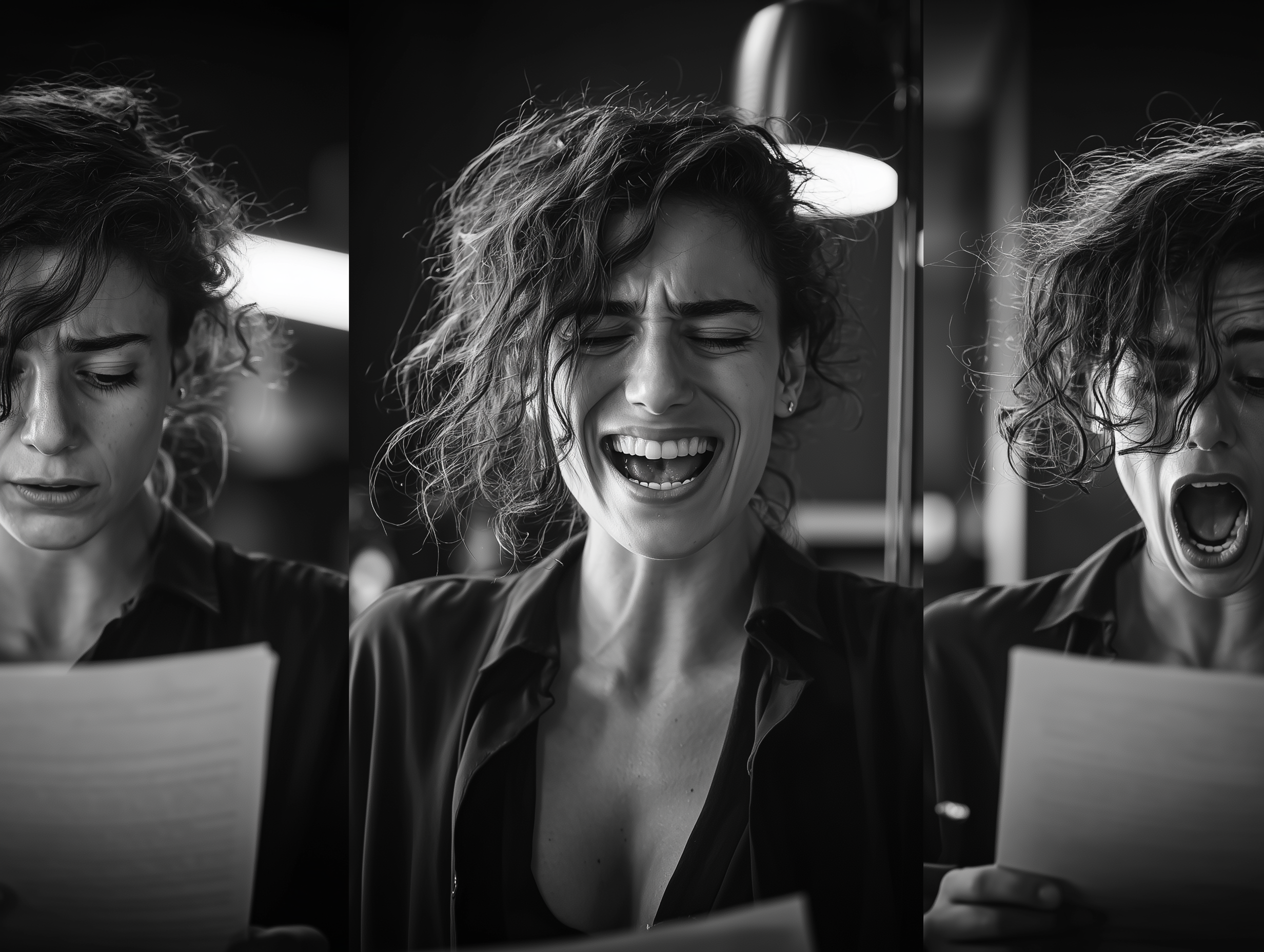
Out of the booth I often find myself listening to other actor’s voices rather than to what they’re saying – a professional hazard for a narrator and voice coach, I suppose. As I do this, I invariably form an image in my mind of what the actor looks like. Usually if I meet them afterwards they don’t look at all like the image that’s been inside my head. I’m sure this happens to you too. What I’m talking about here is the fit of a voice to character and situation. This is something that is really important for a voice artist and an audio book narrator.
Whether you’ve narrated a hundred books or you’re staring down your first audition script or the first chapter of the book you’ve been hired to narrate (hooray), the truth remains the same: the voice – the sound or tone of it as well as how it’s used – carries the entire experience. No lighting, no set, no cast to bounce off. Just you, the text, and the listener’s imagination doing most of the work. As someone once said to me about radio drama when I first began, “The pictures are better on radio.” Nowadays (sadly) there are fewer radio dramas to perform but we do have audiobooks and dramatic podcasts, both descendants of radio drama, and the principles remain the same. I’ve been thinking a bit more about this first one.
Your primary job as a voice artist (because that is what you are) is to find the vocal fit that honours the material. When it comes to audiobook narration the industry has moved on (thankfully) from the idea of a generic “narration voice.” What matters is tone, rhythm, emotional temperature, the alignment between your natural instrument (your voice) and what the book actually needs. Some narrators sense this instinctively while others grow into it over time. What does this mean?
Here are a few questions that help to anchor the process:
• What’s the emotional climate of the book?
• How intimate should the storytelling feel?
• Which characters genuinely need contrast, and which work better with a lighter hand?
• What tempo and rhythm does the prose suggest?
Narrators, especially those with stage or screen backgrounds, often arrive ready to perform the book. The impulse is understandable; performance is what you know. But audiobook work rarely wants the full show or the same kind of energy. It wants focus and precision and consistency across character narration. With long-form audio understated work tends to hold listeners more reliably across hours. Having said that, vocal variety also matters a lot; in most cases yours is the only voice the listener will hear. I’ll get on to that in another post.
Radio offers helpful clues. Late-night presenters glide and relax you for rest. Breakfast hosts fizz and go flat out, waking you up. They understand pacing, breath, and tone-shading as they reflect the tone of the show. Audiobook narrators draw from that knowledge but stretch it into something longer and more sustained: storytelling that remains consistent without becoming flat, expressive without becoming intrusive.
For Narrators Still Finding Their Feet
When you’re new, it’s easy to worry about everything except the one thing that truly matters. Accents, equipment, cupboard-like acoustics are all important, of course but, in a way, all secondary. The central question is simple: What voice fits this book? This is the key to unlock the approach to the narration track you take. It’s also the thing you have to keep at the forefront when auditioning.
Most beginners latch onto characters first. Fine, but the real anchor is the narrator’s voice, shaped to meet the text on its own terms. Sometimes that means speaking with a lighter touch. Sometimes it means giving the prose more breath. Sometimes it’s a firmer spine in the phrasing. You’ll hear what’s needed if you give the text time to tell you. And, of course, there are dialects and accents in the mix. I’m sure I’ll have more to say about that in another post, but that’s for another time.
It’s important that you don’t over-enunciate in the hope of sounding “professional.” If you do it sounds unnatural to the ear and fake. What listeners want is clarity without rigidity or apparent effort.
For Actors Moving Into the Booth
Stage experience gives you a strong base: vocal agility, understanding of beats, sensible instincts. But the booth rewrites the rules. Your hands might be giving the performance of a lifetime, but no one will see them. Everything is reduced to breath, tonal placement, pitch, phrasing, and restraint.
(The good news: using your hands still helps. Many narrators are practically conducting their sessions. The energy travels into breath and sound, where it is heard.)
The goal isn’t to shrink your performance; it’s to focus it. Audiobooks demand the kind of storytelling where you listen to the text as if it were your scene partner. The fundamentals still apply: know who’s speaking and to whom, where they are, what they want, and how that changes the delivery. Reading the whole book first is still the simplest fix for many of the problems narrators meet in the booth.
And then there’s stamina. Narrating a book is an endurance sport. Rest your voice regularly. Hydrate more than feels necessary. The “claggies,” that awful combination of dryness, mouth noise, and mild irritation, arrive the moment you ignore the basics. Give yourself a break every hour or so. Two hours is the limit before the quality starts slipping. Make sure you fully hydrate before you start a session.
Where All Narrators Meet
Regardless of experience, the principle holds: create the conditions in which your voice can align with the rhythm of the book. When you get that right, everything else becomes easier. Listeners don’t notice the technique. They stop hearing “a narrator” and start hearing the story. That’s your goal. That’s the quiet magic of this work, the moment when the machinery disappears and all that’s left is the world of the book, carried on a voice doing exactly what it needs to do.
If the voice carries the story, the workflow carries the narrator. I’ll unpack that in future posts.
Thanks for reading.