High Desert Dreaming
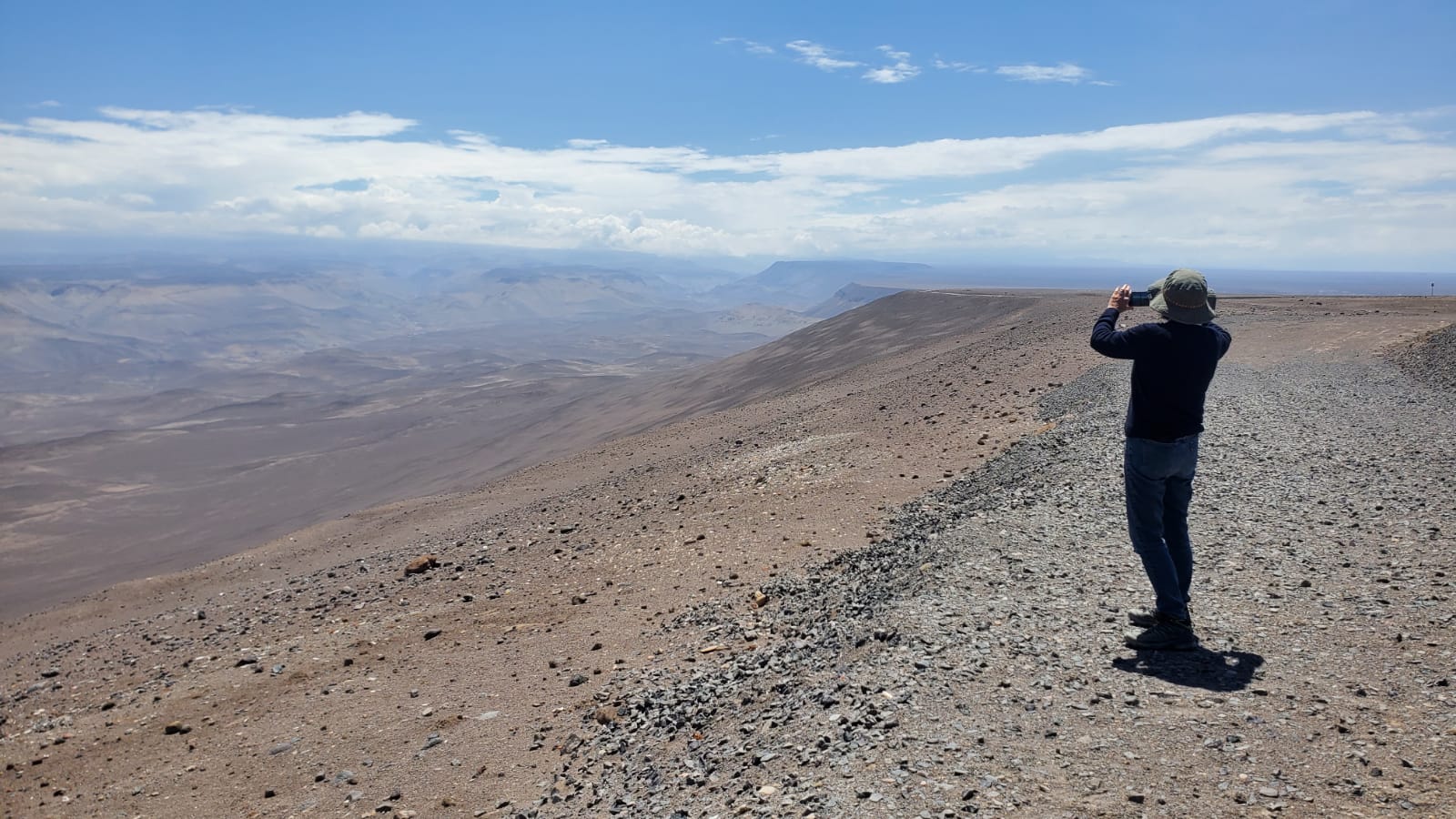
I’ve been to deserts before, but nothing quite prepared me for the Atacama. This is the driest place on Earth — and it looks it. At first glance, it seems impossible that anything could thrive here. Then, by some sleight of hand, the landscape proceeds to astonish you.
We’d flown into Santiago, transferred north to the desert town of San Pedro de Atacama, and within hours were standing at 2,500 metres above sea level looking out over a terrain that appears to have been sculpted by forces barely imaginable. The colours alone — rust, ochre, violet shadow — are enough to stop a conversation mid-sentence.
The Valley of Death (or Mars — the translation seems uncertain)
Nobody could quite agree whether we were in the Valley of Death or the Valley of Mars — apparently a French-to-Spanish confusion somewhere along the line — but it hardly mattered. The valley earns whatever dramatic name you care to give it. What strikes you immediately is the tilting: entire strata of rock and mineral folded and wrenched sideways as though some enormous hand had reached down and simply reorganised the geology. You feel yourself shrink in a way that is, oddly, pleasurable. The ancient earth gets on with its business regardless of our human fussing, and there’s comfort in that.
Before the valley, we’d visited a cluster of pre-Columbian adobe beehive huts — magnificent structures slowly losing ground to the encroaching dunes. They were built well before the Inca arrived, and the guide was plainly frustrated that so little attention was being paid to their preservation. I found myself hoping he was wrong about their fate.
Later came the Devil’s Throat canyon, a narrow gorge beginning to accumulate water as the rainy season approached. Distant peaks had acquired a fresh cap of snow overnight, and the scale of the view made you want to simply stop talking.
Up into the high country
The following day took us higher still — nearly 4,000 metres, into landscape that felt genuinely otherworldly. Salt lakes fringed by golden spinifex. Volcanoes in the distance, patient and enormous. And birds: so many birds.
For the first time in my life, I saw flamingos in the wild. They were standing in the shallows of a high-altitude lake, pink against the white salt crust, entirely unbothered by our presence. Crested ducks worked the water nearby. Vicuñas grazed on the grasses between the lakes, delicate and a little shy. I’m not generally prone to wildlife hyperbole, but this was something else.
The third day brought the rainy season’s first hesitant rains, and the desert’s response was immediate. Down in the valley communities — where the Inca trail still runs beside cultivated terraces of oregano, tomato and native passionfruit — everything looked improbably green against the brown hillsides. Prickly pear fruited along the paths. And then, high above a small village, an Andean condor.
I watched her for a good two minutes, gliding and swooping without a single wingbeat. She was enormous and utterly unhurried. It remains one of the finest things I have ever seen.
A note on the ancient past
Scattered through these days were encounters with a deeper history: geoglyphs from the Tiwanaku civilisation (2,000–1,000 years before the Inca); notes from an ethno-botanist named Nico on how the Southern Cross guided planting, harvest and remembrance; the story of how good evidence now exists that the wild tomato was domesticated here, in the Atacama, before trading routes spread it north. Jerky, as it turns out, is an Inca word — ch’arki — and so is much else we take for granted.
Chile is a country of extraordinary contrasts, and the Atacama shows you the outer limit of those contrasts early. The desert teaches patience — it waits, still and enormous, while we scramble about taking photographs. A little rain and it blooms. A condor passes overhead and it reminds you what perspective actually looks like.
Next: Sailing south into the roaring 40s aboard the MV Skorpios II.